Of Flawed Considerations and Failed Legislations: Observations from the Implementation of the Commercial Courts Act, 2015

Introduction: The Promise of 2015

When the Commercial Courts, Commercial Division, and Commercial Appellate Division of
High Courts Act was enacted in 2015, it was hailed as a "game-changer" for India’s ease of
doing business. The legislative intent was clear: to create a specialized fast-track mechanism
for high-value commercial disputes, thereby boosting investor confidence and reducing the
notorious backlog in Indian courts. However, nearly a decade later, the gap between the
statutory promise and the ground reality remains vast. While the Act introduced sophisticated
procedural tools, it arguably failed to account for the systemic fragility of the Indian
subordinate judiciary.

The Structural Flaw: Specialized Courts without Specialized Infrastructure
One of the primary "flawed considerations" of the CCA was the assumption that merely designating existing civil courts as "Commercial Courts" would automatically translate into efficiency. In many jurisdictions, a judge presiding over a commercial matter on a Monday might be hearing a matrimonial dispute or a criminal bail application on a Tuesday.

True specialization requires a dedicated cadre of judges trained specifically in complex commercial laws—Intellectual Property, Insolvency, and Maritime Law. By failing to create a separate, independent infrastructure and instead "tagging" existing judicial officers with additional commercial responsibilities, the legislation ignored the reality of judicial over- burdening. The result is a system where "commercial" status is often just a label on a folder rather than a shift in judicial approach.
The Pecuniary Tug-of-War

The evolution of the "Specified Value" under the Act reveals a legislative trial-and-error
approach that has caused significant confusion. Initially, the threshold was set at ₹1 Crore.
When this failed to clear enough of the backlog, the 2018 Amendment drastically lowered the
threshold to ₹3 Lakhs.
This move was widely criticized as a "failed consideration." By lowering the value so
significantly, the legislature flooded the newly formed Commercial Courts with small-scale
recovery suits. This diluted the "specialized" nature of these courts, turning them into high-
volume recovery centers rather than forums for complex legal adjudication. The very
bottleneck the Act sought to remove was simply relocated to a lower pecuniary level.

Pre-Institution Mediation: A Hurdled Gateway

Section 12A, which mandates Pre-Institution Mediation and Settlement (PIMS), was intended
to be the Act’s crown jewel for Alternative Dispute Resolution (ADR). The Supreme Court’s
ruling in Patil Automation Pvt. Ltd. v. Rakheja Engineers made this mandate "mandatory,"
stating that suits filed without exhausting PIMS (unless urgent interim relief is sought) must
be rejected.
While the intent is noble, the implementation has been flawed. In many districts, the
mediation infrastructure is understaffed or lacks the commercial sophistication required to
settle complex business disputes. Consequently, Section 12A often becomes a "procedural
hurdle" that litigants seek to bypass by claiming "urgent interim relief," regardless of whether
such urgency truly exists. Instead of fostering settlement, it has created a new theater for
preliminary litigation.

Procedural Rigidity vs. Cultural Inertia

The CCA introduced strict timelines for filing written statements (the famous 120-day hard
limit) and mandated the "Case Management Hearing." On paper, these are excellent tools. In
practice, they clash with a legal culture accustomed to frequent adjournments.
The "failed" aspect of this legislation lies in its inability to change the culture of litigation.
While the courts have become stricter regarding timelines, the lack of "Costs and
Consequences" implementation means that many litigants still find ways to protract
proceedings. The Act’s provision for "Summary Judgment" (Order XIII-A) is also
underutilized, as judges remain hesitant to decide cases without a full trial, fearing appellate
reversal.

The Digital Deficit

The 2015 Act arrived at the cusp of India’s digital revolution, yet it did not mandate the end-
to-end digitization of commercial disputes. Electronic filing, digital evidence management,
and virtual hearings—which should be the backbone of a modern commercial court—remain
inconsistent across different states. For a legislation aimed at global investors, the lack of a
uniform, tech-enabled "e-court" experience across all Commercial Divisions is a significant
oversight.

Conclusion: The Road to Redemption
The Commercial Courts Act, 2015, is not a lost cause, but it is a "flawed" one in its current execution. To move from a "failed legislation" to a successful one, the following shifts are necessary:
1. True Specialization:Establishing permanent, exclusive commercial benches with specialized training.
2. Threshold Correction: Re-evaluating the ₹3 Lakh limit to ensure that "commercial" remains synonymous with "complex."
3. Mandatory Costs: Implementing "Follow the Event" costs to discourage frivolous litigation.
4. Incentivized Mediation: Moving PIMS from a "tick-box" exercise to a robust, private-sector-led ADR mechanism.  

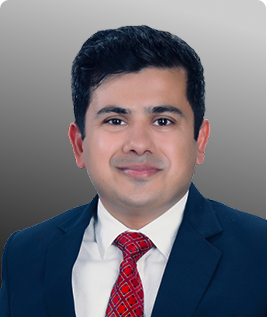
Shubham Saigal

Shubham is an Advocate-on-Record at the Supreme Court of India, specializing in civil-commercial disputes, insolvency and bankruptcy proceedings, debt recovery and restructuring, domestic and international arbitrations, labour and property disputes, and white-collar crimes. He has advised and represented clients in complex matters and transactions. He previously worked with Mrs. Madhavi Divan, Senior Advocate (former Additional Solicitor General of India), assisting in constitutional matters, arbitrations, and insolvency cases, including representing the Insolvency and Bankruptcy Board of India before the Delhi High Court and Supreme Court. Before starting independent practice, Shubham was a Senior Associate at L&L Partners Law Offices (formerly Luthra & Luthra) and an Associate at Karanjawala & Company, appearing in high-stake matters for corporates, start-ups, MNCs, and HNIs before the Supreme Court, various High Courts, NCLT, NCLAT, DRT, DRAT, NCDRC, and district courts in Delhi.

Our Social Media

This will close in 0 seconds

Siddharth Jain

Siddharth is an Advocate-on-Record at the Supreme Court of India, specializing in domestic and international commercial arbitrations, contractual and civil-commercial disputes, insolvency and bankruptcy proceedings, property disputes, and white-collar crimes. He has advised and represented clients in complex matters and transactions. He is associated with Mr. Gaurav Pachnanda, Senior Advocate, Supreme Court of India, assisting in multiple domestic and international arbitrations. Previously, Siddharth worked at L&L Partners Law Offices (formerly Luthra & Luthra), handling high-stake matters for corporates, start-ups, MNCs, and HNIs before the Supreme Court, various High Courts, NCLT, NCLAT, DRT, DRAT, NCDRC, and district courts in Delhi.

Our Social Media

This will close in 0 seconds

Shubham Saigal

  • Advocate-on-Record (AOR) at Supreme Court of India.
  • Specializes in disputes: insolvency, banking laws, white-collar crime, arbitration, civil, labour.
  • Assisted Mrs. Madhavi Divan, Senior Advocate  in constitutional and insolvency matters.
  • Former Senior Associate at Luthra & Luthra Law Offices and Associate at Karanjawala and Co.
  • Regularly appears before Supreme Court of India, High Courts, NCLT, NCLAT, DRT and District Courts.

Our Social Media

This will close in 0 seconds

Siddharth Jain

  • Advocate-on-Record (AOR) at Supreme Court of India.
  • Specializes in arbitration, commercial disputes, insolvency, and property laws.
  • Associated with the Chambers of Mr. Gaurav Pachnanda, Senior Advocate.
  • Formerly part of Luthra & Luthra Law Offices.
  • Regularly appears before Supreme Court of India, High Courts, and domestic and international arbitral tribunals.

Our Social Media

This will close in 0 seconds

Shruti Mishra

Shruti Priya Mishra, LL.B. (Hons.), Litigation Lawyer at Jain & Saigal.
  • Specializes in civil, criminal, and constitutional law matters.
  • Skilled in drafting, research, and case preparation for diverse clients.
  • Appeared before the Supreme Court, Delhi High Court, and tribunals.
  • Graduate of RMLNLU, Lucknow, valued for clarity and strategic legal approach.
  • Our Social Media

    This will close in 0 seconds

    ASHISH SHUKLA

    (Advocate, Supreme Court of India)

    Experience: 8+ years

    Qualifications:

    B.A. LL.B. (Hons.), National Law University Odisha, Cuttack.

    Specialization:

    Ashish is a practicing advocate in the Supreme Court of India. His areas of specialization include civil commercial disputes, insolvency and bankruptcy proceedings, debt recovery and restructuring, domestic and international commercial arbitrations, labour disputes, property disputes, white-collar crimes, etc. Ashish has advised and represented numerous clients in complex matters and transactions.

    Ashish is also associated with Jain & Saigal Law Offices, as an “associate partner” and “off-counsel” of the firm. The managing partners of the firm are Advocate-On-Records, registered with the Supreme Court of India.

    Ashish has appeared in various high-stake matters, representing Corporates, Start-up companies, Multi-national companies, High-net worth individuals, etc., before the Supreme Court of India, various High Courts across the country, DRT, DRAT, NCLT, NCLAT, NCDRC, district courts of Delhi, etc.

    Our Social Media

    This will close in 0 seconds

    Indrajeet Kori

    Inderjeet Kori is a dedicated Court Clerk at Jain & Saigal Law Offices, bringing over 2 years of experience in handling court-related procedures and administrative support for litigation matters.

    He assists the firm with filing of cases, coordinating with court registries, managing case records, and ensuring timely compliance with procedural requirements before various courts and tribunals. His familiarity with court processes and attention to detail help ensure that filings and documentation are handled efficiently and accurately.

    Inderjeet plays an important role in supporting the firm’s litigation practice by facilitating smooth interaction with court staff and maintaining organized case documentation.

    Our Social Media

    This will close in 0 seconds

    Group 33

    BHAVIKA MEHTA

    Bhavika Mehta, BA LL.B., Litigation Lawyer at Jain & Saigal Law Offices.

    • Specializes in civil, criminal, and constitutional law matters.
    • Skilled in drafting, research, and case preparation for diverse clients.
    • Regularly appears before the Supreme Court, Delhi High Court, and tribunals.
    • Graduate of Army Institute of Law, Mohali, with a strong academic grounding in law, complemented by consistent academic performance and research-oriented training.

    Our Social Media

    This will close in 0 seconds

    Nakul Goyal

     Tax Expert at Jain & Saigal Law Offices
    •⁠ ⁠CA, FCA, DISA, Certified Valuer
    •⁠ ⁠13-years of experience in handling direct and indirect taxation advisory and complex regulatory frameworks, involving company laws and FEMA
    •⁠ ⁠B. Com (H), Delhi University
    •⁠ ⁠⁠Regular appearances before ITAT, CESTAT, GSTAT, Commissioner Appeal

    Our Social Media

    This will close in 0 seconds